God’s Eagerness to Forgive
by John MacArthur
Christians have often wondered what the world would be like today if Adam and Eve had never eaten the forbidden fruit and brought sin into the world. It’s an enticing prospect—except that a sinless world would be a world that has never known the forgiveness of God. And that is an inconceivable scenario for our Creator, who earnestly desires to put His lavish forgiveness on full and glorious display to His people.
Christ’s parable of the prodigal son is one of the most expressive reminders in all of Scripture of God’s astounding forgiveness. “While [the prodigal son] was still a long way off, his father saw him and felt compassion for him, and ran and embraced him and kissed him” (Luke 15:20).
It is significant that the father was already granting forgiveness before the son said a word. After the father embraced him, the prodigal started to make the confession he had been rehearsing: “Father, I have sinned against heaven and in your sight; I am no longer worthy to be called your son” (Luke 15:21)—but he barely got that far before the father cut him off, ordering the servants to prepare a celebratory banquet.
But the father said to his slaves, “Quickly bring out the best robe and put it on him, and put a ring on his hand and sandals on his feet; and bring the fattened calf, kill it, and let us eat and celebrate; for this son of mine was dead and has come to life again; he was lost and has been found.” And they began to celebrate. (Luke 15:22–24)
The prodigal never even got to the part of his practiced speech in which he would ask to become one of the hired servants (Luke 15:19). By the time he completed his first sentence, the father had already reinstated him as a beloved son, and the great celebration was under way.
The father seems to have perceived the depth and reality of the boy’s repentance from the simple fact that the boy had come home. He knew his own son well enough to know what his return signified. He could tell from the boy’s appalling condition how much he had suffered the cruel consequences of his sin. So he didn’t even permit the boy to finish making his confession before he granted him mercy. This was an act of grace that went far, far beyond anything the boy had ever dared to hope for.
The prodigal’s unfinished confession may seem a subtle detail in the flow of the story, but it made a not-so-subtle point for Christ’s audience as He told the parable. There was no way the Pharisees missed one glaring reality in the father’s eagerness to forgive—the boy had done nothing whatsoever to atone for his sin!
Throughout the centuries Roman Catholics have performed acts of penance in attempts to compensate for their sins. And it was a common practice for cloistered monks—like Martin Luther prior to his conversion—to flagellate themselves as a supposed means of self-purification. Those practices may be on the wane today, but the mindset persists every time we feebly attempt to make up for our wrongs through some good deed. Yet the story of the prodigal son reminds us that God’s mercy is never contingent on man-made efforts at atoning for sin. The father’s forgiveness for his wayward son was full, lavish, and completely unrestrained.
But doesn’t common sense demand that sins be atoned for? Didn’t God Himself say He will not acquit the guilty (Exodus 23:7) and that He will by no means allow the guilty to go unpunished (Exodus 34:7)? How could a notorious rebel like the prodigal son simply be let off scot-free? Whatever happened to righteousness? What about the principles of divine justice? Wasn’t the entire Old Testament system filled to overflowing with priests and sacrifices and other symbols of atonement—precisely in order to stress this fundamental truth?
As we’ll see next time, our Creator doesn’t simply look the other way when He forgives our sins. Atonement is most certainly needed and provided for—by God Himself.
(Adapted from The Prodigal Son)

John MacArthur is the pastor-teacher of Grace Community Church in Sun Valley, California, chancellor of The Master’s University and Seminary, and featured teacher with the Grace to You media ministry. Grace to You radio, video, audio, print, and website resources reach millions worldwide each day. In more than five decades of ministry, John has written dozens of best-selling books, including The MacArthur Study Bible, The Gospel According to Jesus, The MacArthur New Testament Commentary (thirty-four volumes), and Slave. He and his wife, Patricia, have four married children and fifteen grandchildren.
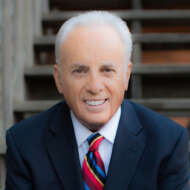
This article is used with permission, and is available here under copyright law, online, COPYRIGHT ©2023 Grace to You. Photo of John MacAuthur used with permission from Grace To You Ministries at gty.org
0 Comments