
Starting Point
Let’s suppose that a man with a hearing problem wants to travel from Regina, Saskatchewan to Winnipeg, Manitoba. He asks an acquaintance how to accomplish this journey. He is told that Winnipeg is 575 kilometres east. But somehow the man with the hearing problem misunderstands and travels north instead of east.
After traveling quite a distance, the man finds himself still in Saskatchewan. He phones the friend who gave him directions and listens very carefully this time. “I told you that you must go east. Not north, but east.” So, our hearing-impaired friend (who is also perhaps geographically impaired) find an east-west road and travels east.
He is going in the direction originally indicated now. But somehow after quite a bit more travel, he finds himself hopelessly tangled among lakes well to the north of the desired destination.
Different points
This is a parable. It is a reminder of the simple truth that doing a right thing from a wrong starting point will not accomplish the desired result. The directions given would have worked given the assumed starting point. But once the starting point changed, what had been the right direction was now wrong.
We used to know a man who gave the same reply to every greeting (perhaps he was hearing impaired). If someone said, “Hello. How are you?” He replied, “Just fine. Just fine.” If someone said just “hello,” he still replied, “Just fine. Just fine.” If you skipped all greetings and asked for the exit, he still replied, “Just fine. Just fine.” We used to joke that if you began by saying, “The building is on fire,” he would still reply, “Just fine. Just fine.” When it comes to meaningless small talk, maybe that is just fine. But when it comes to greater questions, giving the same answer to every inquirer is not fine. It is foolish.
In answer to the question at Pentecost, “What shall we do?” Peter replied, “Repent and be baptized every one of you in the name of Jesus Christ for the forgiveness of your sins…” (Acts 2:38). But John indicates that cleansing from sin is obtained by “walking in the light” (1 John 1:7). Is Peter wrong? Is John mistaken? No, they are addressing different situations. The way a non-Christian comes to Christ for forgiveness is not the same as how a person already in Christ receives ongoing cleansing.
What a Christian who has fallen into sin needs to do is different from what a non-Christian should do. The role of a Christian son is not the same as that of a Christian father, which is not the same as that of a Christian grandfather.
One-size does not fit all
Many a Christian grandfather wishes that he could go back and start all over again. We wish we could rewrite history – being better sons and better fathers this time around. But life is not a game of Monopoly. In real life, we only pass “go” once. Going back and starting again is usually not an option. Having been less than an ideal son, having been well below par as a dad, one should still make the best of grandparenting.
We must assess where we are in our relationship with our grandchildren. We must make a reasonable assessment of where we might hope to be. And we must work out how to get to this more ideal relationship starting from where we are. We cannot choose a “one-size-fits all” style of grandparenting. It could be that geography forbids it. My grandparents all lived within ten miles of my home. I was able to see them at least weekly. None of my grandchildren live within 5000 miles of me. I see them only once in two years. I work from a different starting point and cannot grandparent as my grandparents did. But that does not mean that I cannot be a good grandfather.
I had wonderful grandfathers. But I will not succeed by attempting to reproduce their style of grandparenting. A realistic assessment of the starting point must take place. I must ask, “Where am I geographically? Where am I in my relationship to their parents? Where am I in my relationship to each grandchild?” We cannot determine the direction we should take until we have first determined our starting point.

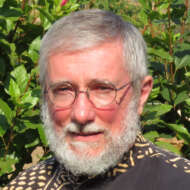
“Thayer Salisbury is a graduate of Oklahoma Christian University (B.A.), Abilene Christian University (M.A.) and Concordia Theological Seminary (Ph.D.). Thayer has served churches in Ohio, Kansas, and Indiana. He has served on the staff of Bible colleges in Nigeria, Swaziland (Eswatini), and Canada. He has also been a guest lecturer at schools in Ghana and Zambia. He and his wife, Chery, have four sons and eight grandchildren. They currently reside in Eswatini, where they devote their time to developing better textbooks for African Bible Colleges and assisting in the work of the local churches.”
He and his wife, Chery, have four sons and eight grandchildren. They currently reside in Eswatini, where they devote their time to developing better textbooks for African Bible Colleges and assisting in the work of the local churches.
0 Comments