
The Great Divide – Chapter 3
Read The Great Divide – Chapter 1, Chapter 2
“You’re never to set eyes on me again, nor I on you!” Eliezer raged at his grandson. “You’re dead! Dead! Do you understand me?”
As his days began to dwindle, that one moment had become more real, more painful, more ingrained into his being than any he had ever experienced. Benjamin – a Christian! This he neither could, nor would, accept. For Eliezer, it was Christianity that caused the centuries of heartache suffered by his people. For Eliezer, it was Christianity that caused the death of his loved ones. For Eliezer, if it was not Jewish, it was Christian. Eliezer did not hate Christians; on the contrary, he got on quite well with his non-Jewish friends. After all, he thought, it was not their fault they were not born Jewish. However, Jewish was Jewish and Christian was Christian, and never were the two to become one. Nor did he think it was possible for them to become one.
Back when Benjamin left for the States, Eliezer’s heart sank. His faithful grandson, however, never forgot his beloved mentor. Benjamin wrote once a week without fail and his letters become Eliezer’s greatest source of joy. Every fifth or sixth day, Eliezer would eagerly await the postman’s arrival. And whenever a letter from the States arrived, Eliezer excitedly would tear into its contents. Then, on one hazy, humid August day, Eliezer’s joy was once again peaked by Benjamin’s latest letter. He quickly read the familiar lines as he made his way upstairs to his second-floor apartment. “Dear Grandfather,” the letter started.
Eliezer froze as he read, then slowly sat down on the stairs, shocked at what he was reading. Though he had long ago burned the letter, almost in effigy of his grandson, he still remembered snatches here, pieces there, of what he considered his grandson’s funeral dirge: “I know you won’t understand …. There’s something you must know … fulfillment of the prophets, especially Isaiah … Yeshua … I love you ….”
For days after the letter arrived, Eliezer considered his emotions: bitterness, rage, hatred, anger, confusion, betrayal, deceit. With all of them blazing in full force, he phoned his grandson. Again, he could not remember the details, but he did recall remnants of the fiery exchange. “How could you …?” “Do you realize what you’ve done?” “Do you want to murder Jews also?” “You’ve turned your back on your heritage.” “You’ve sent me to my grave.” And finally, the proclamation that Benjamin was as good as dead.
From then on, once a year, Eliezer would light the traditional memorial (Yahrzeit) candles for the dead; one for Rivkah, one for Shlomo, and one for his grandson Benjamin.
—
In the U.S, Ann knew that Benjamin would never feel totally at peace with himself until he returned to see his grandfather. She had spent nights listening to Benjamin’s tales about him. He told her about Eliezer’s escape from the Nazis, his war stories, and how he, Benjamin, was the apple of this great man’s eye. She was frequently awakened by her husband’s fervent prayers – a combination of supplication and tears – often made when Benjamin thought Ann was well asleep. She witnessed over and over Benjamin’s futile attempts to reach Eliezer by phone. She was often the one who had to tell him “no” to his daily inquiries regarding letters from Israel. She watched as he attempted to smile, covering the deeply-felt pain. Ann wanted so much to be able to comfort her husband.
—
As simple things – walking, breathing, seeing – became more difficult for the aging Eliezer, he felt certain that he would never see the fulfillment of Isaiah 30:19-26. He was also sure that, unless he acted quickly, he would never see Benjamin again.
Despite the “death sentence” he had pronounced on Benjamin, Eliezer could never live as though Benjamin were actually dead, nor stand behind his bold proclamation. Every time he thought he could escape the shadow of his grandson, another letter from the States would arrive. At first, Eliezer tore them up and tossed them in the garbage. However, he would soon be scavenging for the pieces like a vagrant rummaging through a trash bin. He then began to simply place the letters in a drawer, hoping he could forget them. When enough had accumulated, he could hold out no longer. He read every one, from beginning to end. Never once did Benjamin try to lecture his grandfather. Instead, Eliezer learned of Benjamin’s straight A’s in graduate school, his excellent job, and of his Gentile wife. Eliezer could not understand how a Gentile could have such a heart for Jewish people. “But Ann does,” Benjamin wrote, and Eliezer was fascinated. Then there was Josh – “very much like me, and even more like you, Grandfather.”
As the letters mounted and his days grew shorter, Eliezer decided that seven years were enough. One unforgettable night, Eliezer, seeking guidance, struggled to his knees, closed his eyes, and for the first time in his 73 years, prayed.
—
Praying was never a problem for Benjamin, but too often he failed to follow his prayer with action. Ann found herself at the point of pleading. “Enough praying,” she urged. “Just go to him.” But there was always an excuse: “He won’t talk to me.” “He’ll throw me out.” Benjamin had them down pat. But more than anything, he could not bear to be rejected again.
Ann’s arguments had expired, but not her determination. As Benjamin prayed for his grandfather one quiet night, Ann entered behind him, waited for a pause and tenderly recited one of Benjamin’s favorite verses: “I will go down with you to Egypt, and I will also surely bring you up again; and Joseph will put his hand on your eyes.”

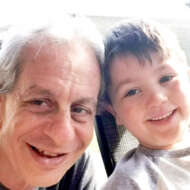
David Ettinger was born and raised in a Jewish family in New York. After moving to New Mexico as an adult, he suffered through many trials. The nudge of the Holy Spirit caused him to examine his heart and in 1986 he surrendered his life to Jesus and has walked with Him ever since. David holds a BA, and MA, in English from New Mexico State University. He began his journalism career writing for The Roundup, the university paper. After graduation he became the sportswriter for the El Paso Times. He has held many other positions as both writer and editor with major publications. David is active in providing his skills with Zion’s Hope, Inc., in Winter Garden, Florida. His publications include Lifeway publications, Single Parent magazine (Focus on the Family), Zion’s Fire magazine, and Real Life magazine. In addition, he served as managing editor for Zion’s Fire and Real Life. David’s book, Overcomers: 30 Stories of Triumph from the Bible, is available online. David is proud of his son and grandson. Please read his testimony here, on his website.
0 Comments