|
Additional purposes include to preserve our free will, to allow for Christian growth, and to bring about correction and discipline. Apologist J. P. Moreland says, “Many theists hold that God could not make free creatures who could not sin, for that would be to make free creatures who were not free. Evil is traceable to the free will of God’s creatures. So evil is not evidence of a limit to God’s power any more than his inability to make a square circle limits his power.” 13
These arguments are typically set up as theodicies based upon free will, natural law, and soul making.
Third, not only is there purpose to suffering, but also there is no meaningless suffering. That people suffer for no apparent reason does not mean that there is no reason. Two Bible texts support this claim.
Romans 8:28 says, “And we know that in all things God works for the good of those who love him, who have been called according to his purpose.” The clear meaning of this verse is that whatever befalls the believer, it works for their good (whether in this life or only eternally we cannot be certain). This, of course doesn’t take care of the possibility of gratuitous evil for the wicked. However, if the wicked are wicked, then they deserve punishments. The only question that remains is whether or not those punishments are just. The Christian God is just and therefore no evil befalls the wicked without purpose or fairness. “The wicked have their fill of trouble” (Proverbs 12:21b).
Proverbs 12:21 in its entirety says, “No harm befalls the righteous, but the wicked have their fill of trouble.” The word for “harm” is translated as “evil” in the KJV. The Hebrew word means “to come to naught or nothingness.” 14 Said differently, nothing that happens to the righteous will come to naught or amount to nothing; suffering is not meaningless.
Because the Bible says that people will suffer and that such evils have purpose and are not meaningless, there is great comfort and even joy for the believer. While Jesus said that in this world we will have trouble, He also said, “But take heart! I have overcome the world” (John 16:33). “Therefore we do not lose heart. Though outwardly we are wasting away, yet inwardly we are being renewed day by day. For our light and momentary troubles are achieving for us an eternal glory that far outweighs them all” (2 Corinthians 4:16-17). Not only this but also, “We rejoice in the hope of the glory of God. Not only so, but we also rejoice in our sufferings” (Romans 5:2b-3a).
This explanation goes a long way to provide psychological confidence to persons concerned about the presence of apparently meaningless evil and suffering. We may not be able to attain logical certainty, but we can attain psychological certainty.
Conclusions
What is the evidence for and against the existence of gratuitous evil? I have shown a brief history of both the deductive and inductive arguments against theistic belief because of evil and apparently gratuitous evil.
Let’s think about and feel the weight of the evidence. Inductively, atheists cannot prove that greater goods do not exist. Neither can theists prove they do exist, but theists can point to numerous possible reasons.
While experience strongly suggests that pointless evils exist, Christian belief is based upon the Bible, which declares there are no acts of meaningless evil. In fact, the Bible declares numerous possible and actual reasons for suffering.
Our strongest inductive arguments against gratuitous evil are religious experience, the didactic teachings of the Bible, and the historical experiences recorded in the Bible. That the existence of evil cannot be made to prove that belief in the theistic God is logically inconsistent is a profound argument against gratuitous evil.
The combined strength of two arguments is persuasive and forms strong support against gratuitous evil and for belief in God: First, that inductively theists have a strong case to support the idea that no gratuitous evil exists and, second, that deductively theists have removed the problem of evil altogether.
God always has a reason for allowing evil. Even if we stop here and admit we don’t know the reasons why, what follows is of “very little interest,” as Plantinga puts it. “Why suppose if God does have good reason for permitting evil, theists would be the first to know? Perhaps God has a good reason, but that reason is too complicated to understand. Or perhaps he has not revealed it for some reason.” 15
Moses states it this way: “The secret things belong to the LORD our God” (Deuteronomy 29:29a).
Even Rowe concedes, “To say no greater good exists would require omniscience on our part.” 16
Can the atheologian prove any unjustified evil? No. Can he offer any probable reasons for unjustified evil? No. All he can say is that it appears to be meaningless, but he cannot say why.
When the confluence of all arguments for the existence of theistic God are considered—cosmological, teleological, religious experience—it seems more reasonable to conclude that these evils that appear pointless do, in fact, have a point, especially when viewed in perspective of the biblical record. We can have psychological certainty that no gratuitous evil exists.
SOURCES:
1 Alvin Plantinga, God and Other Minds (Ithaca: Cornell University Press, 1967), 115.
2 David Hume, God and the Problem of Evil (from Dialogues Concerning Natural Religion), Rowe, William L. and Wainwright, William J., editors, Philosophy of Religion: Selected Readings (New York: Harcourt Brace Jovanovich, Inc., 1973), 187.
3 Ronald H. Nash, Faith and Reason: Searching for a Rational Faith (Grand Rapids: Academie Books, Zondervan Publishing House,1988), 181.
4 Alvin Plantinga, God, Freedom, and Evil (Grand Rapids: Eerdman’s, 1974), 26. Dr. Nash: This book, though on reserve, was not in the library on three separate occasions. I have obtained this material from your book, Faith and Reason.
5 Ibid, 30.
6 Nash, 195.
7 Patrick M. Morley, The Rest of Your Life (Nashville: Thomas Nelson, Publishers, Inc. 1992), 147.
8 William Rowe, “The Problem of Evil and Some Varieties of Atheism,” American Philosophical Quarterly, Volume 16, October 1979, 335.
9 Ibid, 335.
10 R. C. Sproul, John Gerstner, and Arthur Lindsley, Classical Apologetics (Grand Rapids: Academie Books, Zondervan Publishing House, 1984), 135.
11 Rowe, 338.
12 William Hasker, “The Necessity of Gratuitous Evil,” Faith and Philosophy, Volume 9, January 1992, 24-40.
13 J.P. Moreland, Scaling the Secular City (Grand Rapids, Baker Book House, 1987), 66.
14 Strong’s Exhaustive Concordance.
15 Nash, quoting Plantinga in God, Freedom, and Evil.
16 Rowe, 337.
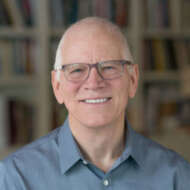
 Motivated by his own search for meaning, purpose, and a deeper relationship with God, Patrick Marley started a weekly Bible study in a bar with a handful of guys in 1986—a study that now reaches thousands of men around the world every week. Inspired and challenged by those studies and conversations, he wrote The Man in the Mirror, named one of the 100 most influential books of the 20th century. The deep hunger he saw in men for a more authentic life led him to start Man in the Mirror—a global men’s ministry impacting thousands of churches and millions of men. Widely regarded as a leading authority on men’s issues, Patrick has written 22 books and more than 750 articles—all focused on helping men solve their most compelling problems. His books have been translated into numerous languages and printed in 48 countries. “The ministry of Man in the Mirror exists,” says Patrick Morley, “in answer to the prayers of all those wives, mothers, and grandmothers who have for decades been praying for the men in their lives.” Patrick graduated from the University of Central Florida, earned a PhD in management, completed postgraduate studies at Harvard Business School and Oxford University, and graduated from Reformed Theological Seminary. He and his wife live in Winter Park, Florida. They have two married children and five grandchildren.
Image Created by Andy Oldham using FotorAI
|

0 Comments