
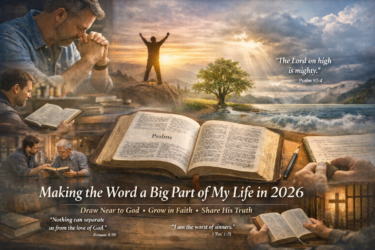
It is probably obvious to most of us who are believers that reading the Bible is pretty important. In fact, in one of my posts, “The Word as Part of Our Life”, I tried to make that very clear. As I pointed out then, making God’s Word an integral part of our life changes everything. It changes how we see and understand God. It changes how we live our lives. And it changes how we interact and impact the lives of others around us.
Not long ago, a friend approached me after a Bible Study and commented about how much scripture I seemed to know. In the very midst of encouraging me, in some sense he seemed a little regretful that he hadn’t memorized as many scriptures. Honestly, I’m not sure if he even realized it.
Yet, this man is someone I would look up to. A brother in the faith who could give me wise counsel. He spent his life serving our Lord. Both locally and in the mission field. In fact, I’d personally heard him articulate the gospel, witness, and guide others. This caused me to think that perhaps we need to be careful about placing too much emphasis on scripture memorization, per se.
Clearly, I have to be careful about what I say here, because I don’t want to reduce the value of memorizing scripture. It is important. Very important. So please, do not misunderstand, I am not saying memorizing scripture is a bad thing. The Psalmist writes, “I have hidden your word in my heart that I might not sin against you” (Psa 119:11). God can, and will, use memorized scripture to His glory.
Still, it seems obvious that some of us are just better at memorizing than others. Some of us really have to work to memorize scripture. Others seem to be able to memorize scripture without much effort at all. It just happens. While it isn’t a gift mentioned specifically in the Bible, perhaps we should see it that way: As a gift from God. And, as with all gifts that God gives, it is to be used for the building up of others. Not envied or seen as better than any other God given ability used for His glory. Paul had to correct those attitudes in the church (see 1Cor 12). We are all equal and important parts of the body. None better than the other.
In the end, we should not be intimidated by the idea of being in God’s word because we aren’t good at memorizing it. Yes, some of us are better at memorizing scripture than others. But that is really beside the point, isn’t it? We don’t read God’s word as a contest. We aren’t being graded. Reading God’s Word regularly is essential for the believer. But the point is, the reason we read our Bibles is to know God better, to draw close to Him, and to learn to live in a way which is pleasing to Him and benefits those around us.
Again, the psalmist writes:
“I rejoice in following your statutes
as one rejoices in great riches.
I meditate on your precepts
and consider your ways.
I delight in your decrees;
I will not neglect your word” (Psa 119:14-16)
One thing that pops out in these verses for me, and I hope you see it too, is the joy found in reading God’s Word. We should “rejoice” and “delight” in reading God’s Word. If we are intimidated by memorizing each chapter and verse our hearts are in the wrong place. We have to reevaluate why we are reading in the first place.
When I read my Bible, am I taking joy in drawing near to God? What is it teaching me about God? About myself? About others? It is easy to reduce our Bible reading to simply something that we should do. As a requirement. Or, even worse, a measure of our value against others because we know more than someone else. Or the inverse, we feel less valued because we think we know less. Where is the joy in that?
We should read the scripture for one reason and one reason only: Because we love God. When we love someone, we want to get to know them better, don’t we? It is the same with God. We love Him and we want to know Him better, so we read His Word. Every other benefit derived from reading God’s Word is rooted in our desire to know Him.
The funny thing is when we read, we come to know Him better which causes us to want to read more. That, in turn, brings us to know Him even better which causes us to want to read even more, and so on, and so on. When we dive into the scripture with joy, we may not recall chapter and verse, but God will certainly bless our efforts.
Dave Foucar has a passion for teaching God’s word. His first book, “What Do I Say When Asked About Jesus?” is a conversational approach to helping people answer questions about Jesus. The book provides a layman’s perspective on personal evangelism and the basics of the Christian faith. Dave has been married for thirty-six years to the love of his life, Debbie. They have three daughters, two sons-in-law, and two granddaughters. To read more of David’s writing visit his Substack page.
Image by ChatGPT
Books by David Foucar:
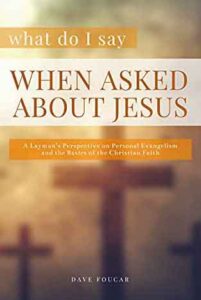 A conversational approach to answering the “what do I say?” question that so many people ask. Will we respond to our call to share the gospel with others? Or will we shy away from sharing because of fear? This overview of the basics of the Christian faith provides an easy to remember outline for sharing the gospel and the encouragement needed to include our own unique stories as part of the sharing. Full of anecdotes and examples shared from a life of service in the church, “What Do I Say When Asked About Jesus?” is a tool to help the everyday Christian share the gospel with others.




0 Comments