Tribulations: Part of the Territory
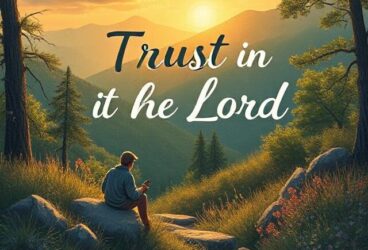
No temptation has overtaken you but such as is common to man; and God is faithful, who will not allow you to be tempted beyond what you are able, but with the temptation will provide the way of escape also, so that you will be able to endure it (I Corinthians 10:13 NASB).
God has promised that He will not allow any trial to be more than we can handle. The question is; how does God do this? Does He limit the temptation or increase our ability to endure?
The commentator Matthew Henry wrote, “for either our testings will be in proportion to our strength, or strength will be supplied in proportion to our temptation.” In other words, he will either limit our trial according to our ability to endure, or increase our ability to endure consummate with the level of the temptation. I am not sure how others view this, but I think I prefer the first scenario over the second one. Unfortunately, at least in my own life, it appears God may lean toward increasing our perseverance rather than eliminating the source of my tribulation. Why do you think God does it this way? Let’s see if we can gain some insight by looking at an incident in the life of the Apostle Paul, a man pretty familiar with suffering.
For we do not want you to be unaware, brethren, of our affliction which came to us in Asia, that we were burdened excessively, beyond our strength, so that we despaired even of life (II Corinthians 1:8 NASB). He was in pretty dire straights. What was God’s purpose? Indeed, we had the sentence of death within ourselves so that we would not trust in ourselves, but in God who raises the dead (v. 9). He was learning to trust in God. The One who had raised the dead could do anything. Often it is only when we come to the end of ourselves (our ability cope) do we find out that God is sufficient. “Our extremity is God’s opportunity” (MH). Anytime we come to end of our own ability to manage a crisis, we find out that God is there.
How much is too much, in relation to trials and temptations? God answers this question, not us. On most every occasion where I told the Lord, I can’t do it anymore; I was wrong. I found out I could. God knew me better than I knew myself. The period between feeling like I couldn’t and knowing I could, was a time of transition from self-sufficiency to a God dependency. It is not rocket science my friends, God gives us the experiences we need so that we will not trust in ourselves, but in Him.
Pray with me. Lord, give me the grace to trust in You. In Your name, I pray.

Ken Barnes worked with Youth With A Mission for seventeen years, primarily involved in discipleship training and evangelism. He is the author of The Chicken Farm and Other Sacred Places, published in 2011 by YWAM Publishing, and Broken Vessels in 2021 through Kindle Direct Publishing. He holds a Master of Science degree from Virginia Commonwealth University in Curriculum and Instruction. He currently is a freelance writer.
Ken’s blogs at http://kenbarnes.us/blog
Ken’s Gleanings at: http://gleanings757.blogspot.com
“WHERE IS YOUR FAITH?” (A TESTIMONY OF HEALING FROM MY FRIEND)
ONCE when I was feeling afraid about a physical trouble, I opened the Bible and started reading about Jesus Christ and his disciples, caught in a storm at sea. The disciples were frantic, afraid they might not survive. Not Jesus. He rebuked the violent elements, and the storm stopped. Then he asked his students, “Where is your faith?”1 That question seemed to look me right in the eye, so to speak. “Where is your faith?” it demanded. “In God–or in the difficulty you’re facing? In the promise of healing or in the prospect of failure? Where is your faith?”
Mentally I sat up straight, amazed to discover at that moment that I had plenty of faith, all right–but it was all in the wrong place! I had faith that I couldn’t master the ailment. Faith it would go on forever. Even faith it might do me in. So much faith in the trouble and so little in God!
This was a sobering realization, since my natural inclination was to trust God. I didn’t want to dishonor Him by doubting His care. After all, through studying and practicing the teachings of the Bible , I had experienced many proofs of His healing love, enough to be convinced that I could count on His help at all times. So rather than feel afraid, I could draw on my understanding of God’s invariably good nature, withdraw my faith in the difficulty, and place it entirely in Him. That’s what I did, and I was healed.
If you’re facing a challenge and feeling uncertain and maybe afraid, you too may want to ask yourself, “Where is my faith?” Is it in the prospect of a bleak future? In the specter of relentless suffering? Are your hopes for happiness and healing placed in the charismatic personality of a mortal or in material things like drugs and diets?
The point is, any confidence we place in the human mind undercuts our faith in God and thus cripples our ability to demonstrate His saving power in our lives. This is why it helps to identify any areas of misplaced faith, anything where something other than God’s goodness is occupying our thought. Then, as we re-channel our trust to the side of God, we’ll find we’re able to master life’s difficulties with greater poise and certainty. Our ability to practice Christian healing for ourselves and others will proportionately increase.
A growing faith in God is a sure sign of spiritual progress. It means that the invisible things of Spirit are becoming more real to us than the visible things of earth. The New English Bible translates the passage “Faith is the substance of things hoped for, the evidence of things not seen”3 in this way: “Faith gives substance to our hopes, and makes us certain of realities we do not see.” Faith gives us the courage to persevere through those times when, to the material senses, there may be no outward sign of progress.
If we’re consistently short on faith, though, this doesn’t mean we are unworthy of redemption and healing. It does mean, however, that we need to get to know God better. We need to gain a more spiritual view of existence.
The faith that heals isn’t the exclusive privilege of select individuals; it’s something every sincere person can attain, since it grows out of understanding God. And everyone can come to understand God.
Your friend -His servant,
Isaac Otieno
That devotion had power of strength love understanding building up of one another it had every single thing about the beatitudes in Matthew 5 that was one of the best ones I’ve ever read thank you thank you so much
You are so right, Timothy. Thanks for your comment! God Bless!